

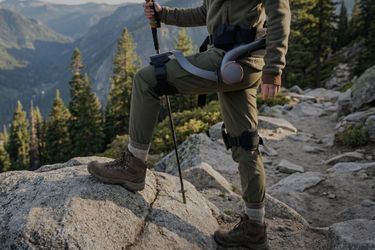
1000W Powered Exoskeleton: Unleashing Superhuman Performance on Any Terrain
Powered exoskeletons are no longer just a concept from science fiction—they’re becoming a reality for outdoor enthusiasts, industrial workers, and mobility-challenged individuals. Among these innovations, the 1000W powered exoskeleton stands out, offering unprecedented strength, endurance, and terrain adaptability. Let’s explore how this cutting-edge technology transforms human performance.
Understanding Peak Output in Leg Exoskeleton Technology: What 1000W Really Means
When we talk about a 1000W powered exoskeleton, the term refers to its peak power output, or the maximum energy the device can deliver to assist the user’s legs. For comparison, this output is roughly equivalent to the power generated by a small motorbike.
This peak power output allows users to perform tasks that would normally require intense physical effort. Whether it’s climbing steep hills or carrying heavy loads, a high-performance exoskeleton ensures that each step is powered efficiently. Engineers design these exoskeletons with precision, balancing power assist technology with human biomechanics to amplify strength without compromising comfort.
For hikers, adventurers, and athletes, this means a leg exoskeleton for hiking can enhance endurance, reduce fatigue, and improve stability, opening up possibilities for longer treks and more challenging trails.
Terrain Adaptability: How Powered Exoskeletons Conquer Any Surface
One of the standout features of modern exoskeletons is their ability to adapt to diverse terrains. From rocky mountain paths to muddy trails, terrain assistance ensures that users maintain balance and control in challenging environments.
Advanced sensors and actuators allow the exoskeleton to adjust its support dynamically, providing extra torque when ascending a hill or damping movements when descending. This adaptability is crucial for climbers and hikers who demand both stability and performance.
In essence, a climbing exoskeleton isn’t just about raw power—it’s about intelligent assistance that intuitively responds to the environment, reducing strain and preventing injuries. With terrain adaptability, outdoor exploration becomes safer, faster, and more enjoyable.
Power-to-Weight Ratio: Maximum Exoskeleton Performance, Minimum Burden
While power is critical, weight is equally important. The most effective high-performance exoskeletons are designed with an optimal power-to-weight ratio, delivering maximum support while remaining lightweight.
A well-balanced exoskeleton ensures that users experience the benefits of power assist technology without being weighed down by the device itself. Materials like carbon fiber composites and advanced alloys allow engineers to minimize bulk while maintaining structural integrity.
This efficiency is especially relevant for long hikes, technical climbs, or prolonged industrial tasks, where every extra kilogram can add fatigue. A lightweight exoskeleton with high power output allows users to go further, move faster, and perform better.
The Future of Outdoor Exploration with AstroShell
If you’re looking to experience the next level of human performance, the AstroShell 1000W powered exoskeleton is a game-changer. Designed for terrain assistance, hiking, and climbing, it combines peak power output with an powered exoskeleton assistance that adapts seamlessly to your movements.
Whether you’re a professional adventurer or someone seeking enhanced mobility, AstroShell’s high-performance exoskeleton provides the strength, stability, and comfort you need. This leg exoskeleton for hiking is designed to support every step, making outdoor exploration easier, safer, and more enjoyable.
Join our mailing list for exclusive updates and $50 welcome discount.

Support Hours:
Mon - Fri: 9am - 5pm EST
Sat & Sun: Closed
©2026 AstroShell All Rights Reserved