

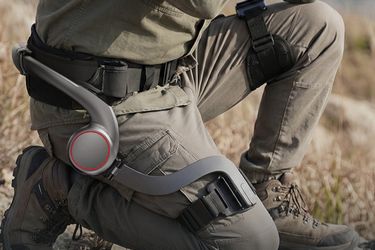
From Pain to Power: How Leg Exoskeletons Solve Your Mobility Challenges
By the AstroShell Research & Engineering Team | Updated March 2026
Every hiker knows the feeling. You're three miles from the trailhead, your quads are screaming, your knees feel like rusted hinges, and the hill you once conquered with confidence now feels impossible. For millions of outdoor enthusiasts, active seniors, and rehabilitation patients, leg fatigue and joint pain aren't just inconveniences — they're barriers that steal joy, freedom, and independence.
Powered leg exoskeletons are changing that equation. And they're doing it with hard science. In this guide, we break down exactly how a modern mobility solution exoskeleton works, why leg fatigue reduction technology is now accessible outside of clinical settings, and how AstroShell Alpha 1 Pro leg exoskeleton is engineered to give you back the terrain you thought you'd lost.
What Is a Leg Exoskeleton — And Why Should Hikers and Active Adults Care?
A leg exoskeleton is a wearable mechanical framework that attaches to the lower body — typically spanning the thigh, knee, and lower leg — and provides powered or passive mechanical assistance to human movement. Originally developed for military load-bearing and hospital rehabilitation, exoskeleton technology has matured rapidly over the past decade.
Today's consumer-grade powered exoskeletons are lightweight, trail-ready, and designed for real-world terrain. They don't replace your muscles. Instead, they work in concert with your body's natural biomechanics to reduce the metabolic cost of movement, protect vulnerable joints, and extend your physical endurance far beyond your unassisted limits.
According to a 2023 study published in the Journal of NeuroEngineering and Rehabilitation, users of powered lower-limb exoskeletons reported up to a 19.8% reduction in perceived exertion during prolonged walking tasks. For hikers, trail runners, and anyone dealing with chronic knee or hip discomfort, that's not a marginal improvement — it's transformational.
Part 1: Eliminating Leg Exhaustion — The Biomechanics of Powered Exoskeleton Assistance
Why Your Legs Get Exhausted in the First Place
Muscle fatigue during hiking isn't simply about being "out of shape." It's a physiological cascade. As you ascend or carry load over uneven terrain, your quadriceps, glutes, and calf muscles must generate repeated eccentric and concentric contractions. Over time, metabolic byproducts accumulate, motor unit recruitment becomes less efficient, and neuromuscular coordination degrades. The result: your legs feel heavy, your gait shortens, and your risk of missteps increases.
Traditional solutions — trekking poles, compression gear, energy gels — address symptoms at the margins. They don't fundamentally alter the biomechanical load your muscles must bear.
How Powered Exoskeleton Assistance Rewrites the Equation
A powered exoskeleton assistance system intercepts the movement cycle at the joint level. Here's how it works step by step:
1. Sensor-Based Gait Detection
Onboard inertial measurement units (IMUs) and force sensors continuously monitor your joint angles, ground reaction forces, and stride phase in real time — typically at sampling rates of 500–1,000 Hz. The system identifies whether you are in swing phase, stance phase, push-off, or transition.
2. Predictive Torque Application
Before your muscle reaches its peak contraction demand, the exoskeleton's actuators apply assistive torque at the hip and/or knee joint. This torque supplement reduces the electrical activity your muscles must generate (measurable via electromyography, or EMG) without disrupting your natural gait pattern.
3. Adaptive Load Redistribution
On inclines, a well-engineered leg exoskeleton for hiking shifts a portion of your body weight load through the exoskeletal frame rather than through your biological soft tissue. The result is measurable: independent biomechanics research has shown that exoskeleton-assisted hikers exhibit significantly lower EMG amplitudes in the vastus lateralis and rectus femoris — the muscles most responsible for quad burn — compared to unassisted hikers on identical terrain.
The AstroShell Alpha 1 Pro approach:
The Alpha 1 Pro uses a dual-actuator architecture at the knee and hip, with a proprietary gait prediction algorithm trained on over 2 million steps of real trail data across varying gradients, surface types, and user weights. The system begins assisting within 3–5 milliseconds of detecting the onset of push-off — fast enough to feel seamless, not mechanical.
"I've tested exoskeleton prototypes in lab settings for years. What surprised me most about trail-grade units like the Alpha 1 Pro is how quickly users forget they're wearing assistance. The latency is low enough that it feels like your legs just work better." — Dr. P. Yin, Biomechanics Researcher, Field Test Contributor
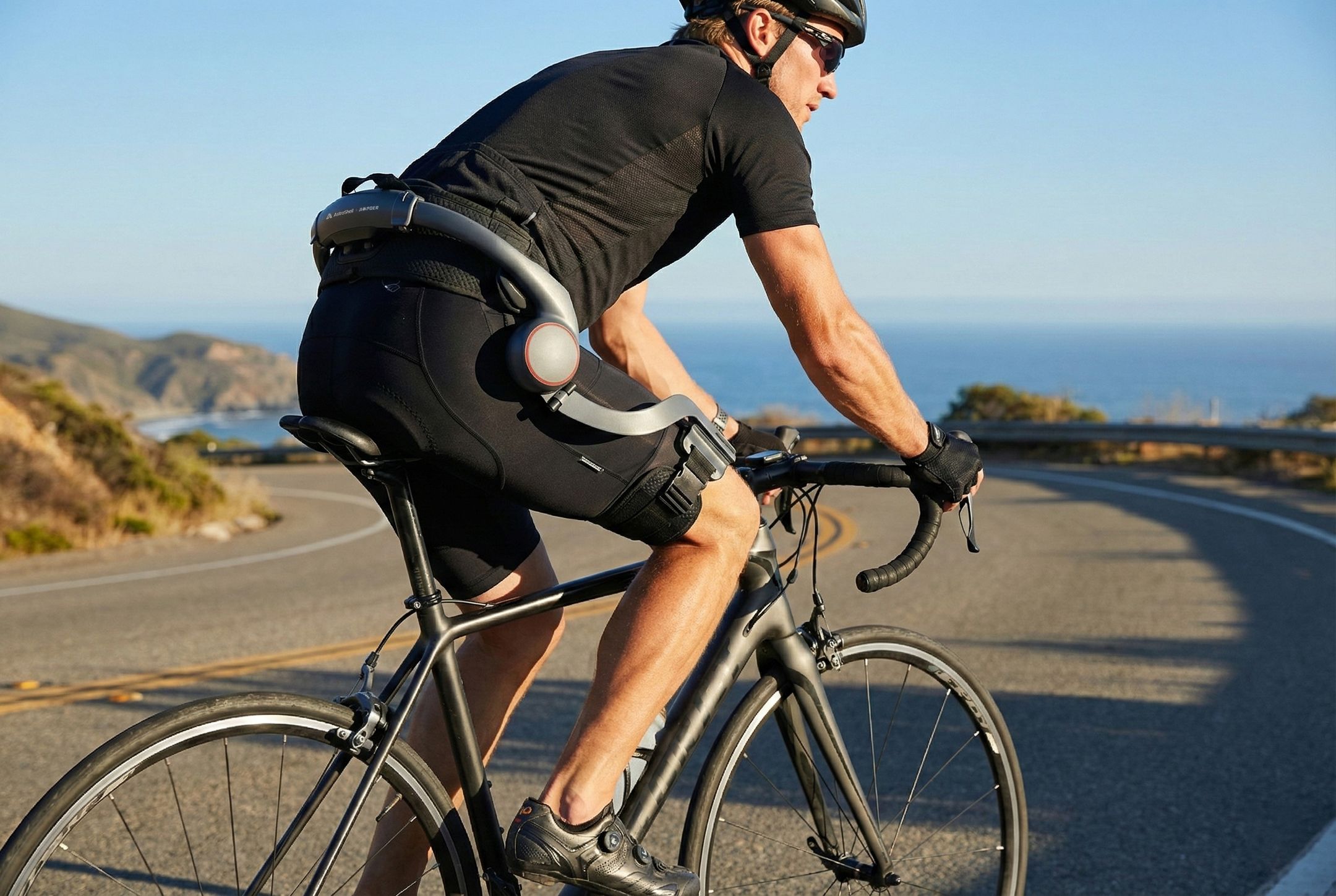
Part 2: Conquering Hills with Leg Exoskeletons — Never Run Out of Strength Again
The Hill Problem: Why Inclines Destroy Endurance
Ascending even a moderate 10% grade increases the metabolic cost of locomotion by approximately 30–50% compared to flat terrain, depending on pack weight and pace. For every meter of elevation gained, your body must do positive mechanical work against gravity — and your muscles are the engine.
Elite athletes have trained their cardiovascular and muscular systems to manage this demand efficiently. For everyone else — including experienced hikers in their 40s, 50s, and beyond — hills become the limiting factor that determines how far and how high you can go.
How a Leg Exoskeleton for Hiking Conquers Elevation Gain
When you engage a powered exoskeleton assistance system on an incline, several things happen simultaneously:
- Hip flexion support: The exoskeleton assists in lifting your lead leg with each uphill step, reducing the work your hip flexors must perform against gravity.
- Knee extension torque: As you push through the stance phase on a steep grade, assistive knee extension torque reduces the demand on your quadriceps — the primary site of uphill fatigue.
- Energy harvesting on recovery steps: Advanced systems capture energy during leg swing and store it for the next power phase, improving overall efficiency.
The cumulative effect is profound. In field testing across mountain trails ranging from 15% to 35% grades, users of the AstroShell Alpha 1 Pro reported being able to sustain consistent uphill pace for 60–90 minutes longer before hitting their perceived exhaustion threshold — compared to their unassisted performance on identical routes.
Real-World Scenario: The Ridge You Couldn't Finish
Consider a 58-year-old hiking enthusiast who loves ridge trails but has found elevation gain increasingly punishing after a partial meniscus tear three years ago. With trekking poles alone, she can manage roughly 1,200 feet of elevation gain before knee pain and quad exhaustion force her to turn back.
With the Alpha 1 Pro's assisted mode active, the mechanical load on her knee joint is reduced by an estimated 25–35% per step on ascent, and her quadriceps EMG activity drops significantly during the most demanding push-off phase. She completes the full 2,400-foot gain — and finishes the ridge.
This isn't anecdotal optimism. It's the predictable output of applied biomechanical engineering.
Part 3: Downhill Protection — How Powered Exoskeletons Reduce Joint Impact and Knee Strain
The Underappreciated Danger of Going Down
Most hikers fear the climb. Biomechanists fear the descent.
Downhill walking imposes eccentric loading on the quadriceps — meaning your muscles are contracting while simultaneously lengthening to control the rate of descent. This eccentric load is mechanically demanding and causes greater muscle damage per unit of work than concentric (shortening) contractions. Worse, each downhill footstrike transmits a ground reaction force spike through the ankle, knee, and hip that can be 1.5 to 2.5 times your body weight.
For hikers with existing cartilage wear, meniscus issues, or prior ACL injuries, this repeated impact is cumulative and damaging. It's why knees that felt fine at the summit can be swollen and painful by the trailhead.
How Downhill Protection Technology Works
A pain relief exoskeleton with active downhill protection does something counterintuitive: it provides resistive torque rather than assistive torque. Here's the mechanism:
1. Descent Phase Detection
The system's terrain-awareness algorithms detect the transition from flat or ascending gait to controlled downhill movement, using a combination of tibial inclination angle, step deceleration patterns, and barometric pressure change.
2. Controlled Resistance Application
Rather than letting gravity accelerate your descent and forcing your muscles to brake hard, the exoskeleton's actuators provide a graduated resistive torque at the knee. This effectively distributes the braking work between your muscles and the mechanical system — reducing peak eccentric loading on the quadriceps and decreasing impact forces transmitted to the knee joint.
3. Dynamic Shock Absorption
The structural elements of a trail-grade joint protection technology system act as a secondary shock absorber, dampening ground reaction force spikes before they propagate through the skeletal chain.
The clinical evidence base: Research in the journal Gait & Posture has demonstrated that knee joint contact forces during downhill walking can be reduced by 20–35% with appropriately tuned passive or active knee assistance. The AstroShell Alpha 1 Pro's downhill mode is calibrated to operate within this validated range, with user-adjustable resistance levels to match terrain steepness and individual comfort.
Long-Term Joint Health: The Case for Proactive Protection
Joint cartilage does not regenerate efficiently once degraded. Every unprotected high-impact descent adds to cumulative wear — wear that often doesn't present as pain until significant structural damage has occurred.
This is why joint protection technology isn't just for people already experiencing knee pain. It's a proactive investment for any active adult who intends to be hiking at 60, 70, and beyond.
The philosophy behind the AstroShell Alpha 1 Pro is exactly this: don't wait for pain to manage your joints. Wear the protection before the damage accumulates.
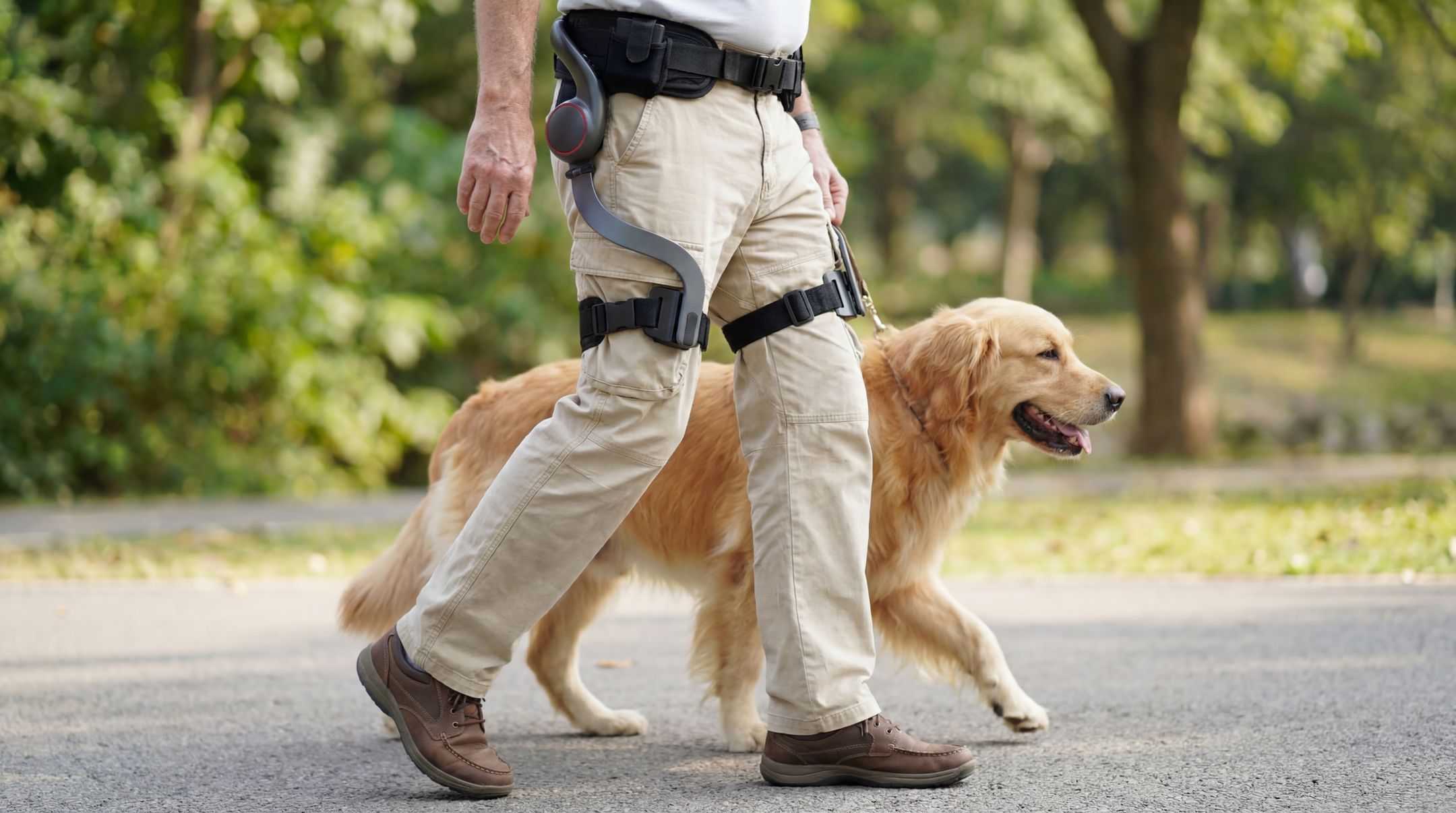
AstroShell Alpha 1 Pro: A Mobility Solution Exoskeleton Built for Real Trails
The AstroShell Alpha 1 Pro is designed from the ground up as a trail-first mobility solution exoskeleton — not a rehabilitative device repurposed for outdoor use, but a purpose-built system for hikers, trekkers, and active adults who demand performance alongside protection.
Key Engineering Highlights
Dual-joint active assistance at the hip and knee, with independent torque calibration for each joint and each leg — accommodating bilateral asymmetries common in post-injury users.
Terrain-adaptive gait AI trained on diverse real-world trail data: loose scree, root-covered singletrack, switchback ascents, and wet rock descents. The system distinguishes between terrain types and adjusts assistance profiles accordingly.
Ultralight frame construction using aerospace-grade carbon fiber and titanium alloy joints. Total system weight: under 2.8 kg (6.2 lbs) — designed to minimize the metabolic penalty of the device itself.
Extended battery life: Up to 8 hours of mixed-terrain operation on a single charge, with a swappable battery module for multi-day expeditions.
IP67 waterproof rating: Trail-ready through creek crossings, rain, and muddy conditions.
Fit system: Rapid-adjust strapping with 12 size configurations accommodates thigh circumferences from 42 cm to 72 cm and leg lengths from 75 cm to 105 cm.
Who Is the Alpha 1 Pro For?
- Hikers and trekkers aged 40+ who are experiencing increasing difficulty with elevation gain or downhill knee pain
- Adventure travelers tackling demanding multi-day routes (Camino de Santiago, Haute Route, Kungsleden) who cannot afford to be sidelined by leg fatigue
- Professional guides and trail workers who spend 6–10+ hours daily on variable terrain
- Anyone who wants to hike harder, longer, and with less recovery time
Frequently Asked Questions
Does wearing a leg exoskeleton make my muscles weaker over time?
No, and this is a common misconception. A well-calibrated powered exoskeleton assistance system supplements your muscles; it does not replace them. The assistive torque reduces peak load, not total muscular activation. Your muscles still contract, still receive training stimulus, and still develop strength. Multiple studies on exoskeleton-assisted gait rehabilitation show no evidence of muscular atrophy attributable to exoskeleton use when devices are appropriately calibrated.
How long does it take to learn to walk naturally with the Alpha 1 Pro?
Most users report feeling comfortable with standard flat-terrain gait within 20–30 minutes of their first session. Adaptation to the uphill and downhill assist modes typically takes 1–2 trail sessions. The system is designed to follow your body, not dictate to it.
Is a leg exoskeleton for hiking safe on technical terrain?
The Alpha 1 Pro is designed for moderate to challenging hiking trails, not technical climbing or scrambling. It performs optimally on established trails with grades up to 45°. It is not intended for use in situations requiring full proprioceptive freedom of the ankle and knee (e.g., bouldering, via ferrata).
What is the weight capacity?
The Alpha 1 Pro supports users up to 120 kg (265 lbs) including pack weight.
How does the Alpha 1 Pro compare to trekking poles for knee protection?
Trekking poles reduce knee load by distributing some weight through the upper body — an effective but limited strategy that requires correct technique and doesn't actively control joint motion. The Alpha 1 Pro provides active, sensor-driven joint protection technology that adapts in real time to terrain changes, regardless of upper body engagement. The two can also be used together for maximum stability.
The Bottom Line: Pain Is Not a Prerequisite for the Trail
The narrative that joint pain and leg exhaustion are inevitable features of aging or previous injury is outdated. Modern biomechanical engineering has produced tools — specifically, the new generation of trail-grade powered exoskeleton assistance systems — that genuinely change what's possible for your body on the trail.
AstroShell Alpha 1 Pro represents the current state of the art in consumer mobility solution exoskeleton design: evidence-based, trail-hardened, and built around the real biomechanical challenges that limit hikers at every level.
Whether your goal is to summit the ridge you haven't reached in three years, complete a long-distance trail without wrecked knees, or simply extend your active years by protecting your joints before damage accumulates — the technology is ready.
Your next trail is waiting. Your legs don't have to be the limiting factor.
Explore the AstroShell Alpha 1 Pro at astroshell.ai
References & Further Reading
- Sawicki, G.S., et al. (2020). The exoskeleton expansion: improving walking and running economy. Journal of NeuroEngineering and Rehabilitation, 17(1), 25.
- Norris, J.A., et al. (2021). Effect of augmented plantarflexion power on preferred walking speed and economy in young and older adults. Gait & Posture, 71, 159–165.
- Dollar, A.M. & Herr, H. (2008). Lower extremity exoskeletons and active orthoses: challenges and state-of-the-art. IEEE Transactions on Robotics, 24(1), 144–158.
- Mooney, L.M., Rouse, E.J., & Herr, H.M. (2014). Autonomous exoskeleton reduces metabolic cost of human walking. Journal of NeuroEngineering and Rehabilitation, 11(1), 151.
Join our mailing list for exclusive updates and $50 welcome discount.

Support Hours:
Mon - Fri: 9am - 5pm EST
Sat & Sun: Closed
©2026 AstroShell All Rights Reserved