

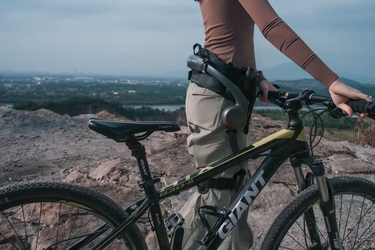
First-Timer's Powered Exoskeleton Guide: Mastering Your Leg Exoskeleton in 24 Hours
Stepping into wearable robotics changes the way you approach the outdoors. Whether you are hauling heavy camera equipment up a steep ridgeline or looking to protect your knees during a multi-day trek, making the transition requires a solid foundation. This beginner exoskeleton guide is designed to help you navigate your first 24 hours with the Alpha 1 Leg Exoskeleton. Unlike traditional hiking gear, this is an active, motor-assisted system that responds dynamically to your biomechanics. Mastering it quickly ensures you can leverage its full potential to reduce physical strain and extend your range. We will walk through the critical phases of integration, from properly configuring the hardware out of the box to understanding how the software interprets your stride on the trail, ensuring you are fully prepared for your next backcountry objective.
Unboxing Your Powered Exoskeleton: Initial Setup in 15 Minutes
A successful powered exoskeleton setup relies heavily on precise physical alignment. When you open the case for the Alpha 1 Leg Exoskeleton, the first thing you will notice is the striking contrast between its rugged capabilities and its physical weight. Constructed from an aerospace-grade magnesium alloy body, the entire unit weighs a mere 4.4 lbs. This specific material choice ensures that the device does not add an initial metabolic penalty before the motors even power on. Your first fifteen minutes are critical; getting started with a poorly aligned frame will negate the biomechanical advantages and could cause friction during long hikes.
To ensure your hardware is field-ready, follow these targeted setup protocols before you hit the trail:
- Align the Mechanical Axis:The physical hinges of the device must align perfectly with your biological joints. Position the primary hip actuators parallel to your hip bone, and ensure the knee mechanisms mirror your natural knee rotation. The system is engineered to reduce hip lift stress by up to 50%, but this metric is only achievable if the machine’s geometry matches your anatomy.
- Secure the Ergonomic Harness:The thigh, waist, and calf straps are the transmission points for the motor's torque. Tighten the waist belt first so it rests comfortably on your iliac crest, bearing the device's minimal weight. Then, secure the leg straps. They should be snug enough to prevent lateral shifting during movement, but not so tight that they restrict blood flow or chafe during a long ascent.
- Initialize the Power Modules:The Alpha 1 features a hot-swappable battery system capable of up to 14.9 miles of range. Before your first walk, insert a fully charged primary battery and practice releasing the secondary slot mechanism. Being able to swap batteries smoothly means you won't have to power down the onboard computer or interrupt the motor assistance during an all-day photography shoot in the backcountry.
- Verify Actuator Clearance:Inspect the housings of the precision planetary gearbox. Ensure no packing materials or debris are obstructing the rotational paths. These joints house the motors capable of 1000W peak power, and keeping the housings clear ensures proper thermal regulation when you eventually push the device on steep inclines.
First Walk Calibration: Finding Your Perfect Leg Exoskeleton Settings
With the hardware securely fitted, the next phase involves synchronizing your movements with the onboard computer. The Alpha 1 is driven by a sophisticated multi-sensor system and adaptive algorithms that need to learn your specific gait. For this initial calibration walk, avoid the trails and find a flat, predictable surface like a paved path or a level driveway. Turn the device on and set the motor assistance to its lowest baseline level.
The first twenty minutes are where you will truly experience the exoskeleton learning curve. As you take your initial steps, the array of internal spatial sensors, torque meters, and accelerometers are polling data hundreds of times per second. You might feel a slight, almost imperceptible delay as the motors attempt to match the exact microsecond your heel strikes the pavement and the moment your hip flexors engage. The most important rule during this phase is to maintain your natural stride. Many new users instinctively alter their walk, moving stiffly or trying to help the machine. Resist this urge. If you artificially change your gait, the adaptive algorithms will learn an incorrect movement pattern, leading to inefficient power delivery later on.
As the multi-sensor fusion processes more of your movement data, that initial hesitation will disappear. The precision planetary gearbox will begin to synchronize flawlessly with your muscular output. You will notice the subtle hum of the 1000W motors engaging precisely when you need to lift your leg, creating a sensation of sustained, low-gravity movement. This is the moment the technology disappears into the background, and you begin to feel the actual reduction in hip lift stress. Only after you have completed this baseline synchronization on flat ground should you consider increasing the assistance levels or venturing onto uneven outdoor terrain.
Week One Optimization: Building Confidence with Your Powered Exoskeleton
Proper user onboarding extends beyond that first day in the driveway. To transition from flat pavement to aggressive mountain trails, your first week should focus on environmental adaptation and progressive load management. The Alpha 1 Leg Exoskeleton is designed for rigorous outdoor sports, including trail running, mountaineering, and cycling, but your muscles and your mind need time to adjust to the altered biomechanics of assisted hiking.
Focus on the following optimization drills during your first seven days to safely build your confidence and trail readiness:
- Simulate Load-Bearing Scenarios:If your primary use case involves carrying heavy loads, such as specialized photography equipment or multi-day camping gear, introduce the weight incrementally. Start with a 10 lb daypack and observe how the adaptive algorithms adjust the torque output to stabilize your shifted center of gravity. Gradually increase the pack weight over several days until you reach your target load.
- Test Variable Inclines:Begin introducing elevation changes into your walks. Start with rolling hills before attempting steep switchbacks. Pay close attention to how the motor assistance surges when you lean forward into an ascent, and how the motors provide gentle resistance to act as a braking mechanism during steep descents, protecting your knee joints from high-impact strikes.
- Monitor Real-World Battery Drain:The advertised 14.9 miles of range is a baseline metric that fluctuates based on terrain and assistance levels. Use your first week to map your power consumption. Navigating deep mud or scrambling over rocky scree will draw more peak power from the battery than walking on a hard-packed dirt trail. Understanding your specific energy expenditure will help you plan battery swaps accurately for longer expeditions.
- Refine the Harness Tension:After a few miles of real-world use, you will likely notice areas where the straps have settled or shifted. Micro-adjustments are crucial here. A harness that feels perfectly snug in the living room might require slight loosening after your leg muscles swell during a strenuous hike.
Advanced Trail Tactics: A Practical Leg Exoskeleton Tutorial
Once the foundational setup and calibration are complete, you can begin to push the Alpha 1 into the demanding environments it was built for. This section serves as a practical leg exoskeleton tutorial, breaking down how the internal systems react to the unpredictable variables of the backcountry. Understanding the invisible dialogue between the terrain and the multi-sensor system allows you to anticipate the machine's behavior and move with greater fluidity, without relying on complex technical manuals on the trail.
When you transition from a well-groomed path to a steep, rocky ascent, the cadence of your stride naturally slows, but the torque demand skyrockets. The multi-sensor system detects this immediate change in elevation and step irregularity. In response, the adaptive algorithms signal the precision planetary gearbox to deploy its 1000W peak power exactly at the moment of hip flexion. You will feel a significant, upward thrust that effectively neutralizes the physical toll of stepping up onto high boulders. For mountaineers or hikers carrying heavy loads uphill, this aggressive reduction in hip lift stress prevents the rapid accumulation of lactic acid in the quads and glutes, preserving your endurance for the summit push.
Conversely, navigating a rapid descent requires a completely different mechanical response. As you hike down a steep peak, the impact sensors register the heavy, downward footfalls. Instead of driving you forward, the motor assist shifts into a negative torque curve. The actuators engage to provide resistance, effectively acting as an electronic shock absorber. This braking action absorbs the kinetic energy that would normally transfer directly into your knee cartilage and lower back, making steep descents significantly less punishing on your joints.
Finally, when traversing uneven, muddy, or highly technical off-trail terrain, the spatial data becomes chaotic. The sensors detect micro-slips and inconsistent footing. The Alpha 1 manages this by making rapid, high-frequency micro-adjustments in torque delivery. Rather than providing long, sweeping pushes of power, the motors pulse subtly to help maintain your balance and stride stability. By trusting the hardware to manage these micro-corrections, you can focus your attention entirely on route finding and navigating the landscape ahead.
Expanding Your Horizons
Transitioning to wearable outdoor technology is a process that rewards patience and precise configuration. By following this beginner exoskeleton guide, you ensure that the Alpha 1 Leg Exoskeleton operates at peak efficiency from day one. Proper hardware alignment, a disciplined approach to the calibration walk, and a gradual introduction to complex terrain are the keys to a successful integration. As you build trust with the multi-sensor system and adaptive algorithms, you will find that the physical boundaries of your outdoor pursuits begin to expand. Whether your goal is to hike farther, carry heavier gear with less fatigue, or simply protect your body during rigorous activities, your AstroShell gear is engineered to support every step of your journey.
Join our mailing list for exclusive updates and $50 welcome discount.

Support Hours:
Mon - Fri: 9am - 5pm EST
Sat & Sun: Closed
©2026 AstroShell All Rights Reserved