

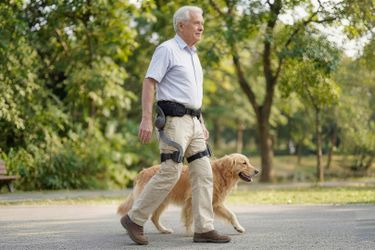
Universal Fit Leg Exoskeleton Engineering: One Powered System for All Body Types
As powered mobility technology moves beyond labs and into real-world use, one challenge has become impossible to ignore: human bodies are not standard-sized. Height, weight, and waist proportions vary dramatically, yet many early exoskeletons were designed around narrow body assumptions. Today, the focus has shifted toward universal sizing exoskeleton systems—solutions that adapt to users, not the other way around.
A truly body type compatible leg exoskeleton must balance engineering precision with human diversity. This article explores how modern powered exoskeletons achieve inclusive fit through height adaptability, high weight capacity, and advanced waist range flexibility—core pillars of inclusive exoskeleton design.
Height Adaptability in Exoskeleton Design: Serving Users from 4'11" to 6'3"
Height variation directly affects joint alignment, stride mechanics, and torque transfer. If hip, knee, and ankle joints don’t align correctly, performance drops—and discomfort rises fast.
To solve this, adjustable fit powered exoskeletons use modular leg segments and telescoping frames that adapt across a wide size range, typically from 4'11" to 6'3". Precision adjustment points allow clinicians, workers, or individual users to fine-tune limb length without tools or complex recalibration.
From an ergonomic standpoint, correct alignment does more than improve comfort. It reduces shear forces on joints, optimizes motor assistance timing, and enables natural gait patterns. In other words, height adaptability isn’t a “nice to have”—it’s foundational to ergonomic adaptability and long-term usability.
Weight Capacity: How Powered Exoskeletons Support Up to 397 lbs Safely
Supporting different body weights is not just a strength issue—it’s a systems engineering challenge. A powered exoskeleton rated up to 397 lbs must account for static load, dynamic motion, and repeated stress over time.
Modern inclusive exoskeleton design addresses this through reinforced load paths, high-strength lightweight alloys, and intelligent torque distribution. Instead of concentrating force at a single joint, power is distributed across hips, thighs, and calves to maintain balance and structural integrity.
Equally important is adaptive control software. Sensors monitor user intent and load changes in real time, adjusting assistance levels dynamically. This ensures that heavier users receive stable, responsive support without sacrificing smooth motion or safety.
The result is a body type compatible leg exoskeleton that performs consistently across a wide spectrum of users—without compromising durability or comfort.
Waist Range Flexibility: Advanced Leg Exoskeleton Accommodation Systems
Waist size variation is one of the most overlooked factors in exoskeleton fit, yet it directly affects comfort, stability, and long-duration wearability. A rigid waist interface can cause pressure points, slippage, or restricted movement.
Advanced systems now incorporate adjustable waist frames, multi-point strap configurations, and flexible padding architectures. These features allow a single device to accommodate a broad waist size range while maintaining a secure, ergonomic fit.
From an engineering perspective, waist flexibility improves center-of-mass alignment and reduces compensatory movements in the upper body. From a user perspective, it simply feels better—and that matters when exoskeletons are worn daily for work, rehab, or mobility support.
This level of ergonomic adaptability is essential for any exoskeleton claiming true universal sizing.
Bringing Universal Fit into the Real World
Universal sizing isn’t about designing for “average” users—it’s about designing for everyone. A well-executed adjustable fit powered exoskeleton combines height adaptability, high weight capacity, and waist flexibility into a single cohesive system.
This is exactly where the AstroShell Alpha 1 Exoskeleton truly stands out. Built around universal fit engineering principles, it’s designed to support diverse body types without sacrificing performance, safety, or comfort. For organizations and individuals seeking a future-ready, universal sizing exoskeleton, it represents a practical step toward truly inclusive human-machine mobility.
Join our mailing list for exclusive updates and $50 welcome discount.

Support Hours:
Mon - Fri: 9am - 5pm EST
Sat & Sun: Closed
©2026 AstroShell All Rights Reserved