

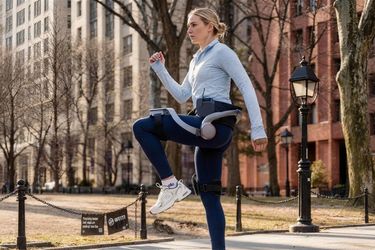
Dual-Side Control in Powered Exoskeletons: Instant Power Adjustment at Your Fingertips
Powered exoskeletons are becoming increasingly sophisticated, offering users greater control over movement, assistance levels, and energy efficiency. Among these innovations, dual-side exoskeleton controls are transforming the way users interact with their devices. With instant adjustment capabilities, operators can adapt in real time to changing conditions, enhancing comfort, performance, and safety. This article explores ergonomic design, quick adjustment protocols, and advanced techniques for mastering powered exoskeleton interfaces.
Ergonomic Button Placement in Leg Exoskeleton Design: Natural Access Points
The foundation of intuitive exoskeleton control begins with thoughtful placement of buttons and input mechanisms. Leg exoskeleton accessibility is greatly improved when control points are positioned within natural reach of the user’s hands. Well-designed interfaces reduce the need for awkward movements, allowing users to adjust assistance levels seamlessly while maintaining balance and focus.
Ergonomic design also enhances real-time exoskeleton power management. When buttons or touchpads are easily reachable from either side, users can make instant adjustments without interrupting gait or workflow. Modern devices incorporate tactile feedback and clear labeling, enabling users to operate the system confidently even in low-visibility conditions or while wearing gloves. This intuitive control design ensures that exoskeletons support rather than distract from user activity.
Quick Adjustment Protocol: Adapting Your Powered Exoskeleton to Changing Conditions
Once controls are accessible, users must understand how to employ dual-side exoskeleton controls effectively. Quick adjustment protocols allow operators to adapt to terrain changes, load variations, or fatigue levels in real time. For example, increasing assist during uphill sections or reducing support during downhill movement optimizes energy usage and reduces strain.
The protocol typically involves a combination of pre-set modes and manual adjustments. Instant adjustment ensures that switching between levels occurs without delay, maintaining smooth operation and preserving natural gait. Training users to recognize the impact of each control input on overall performance is essential for effective real-time exoskeleton power management.
By integrating these protocols into routine practice, operators achieve a responsive, adaptive experience. This capability transforms the exoskeleton from a static support device into a dynamic extension of the user’s body, enhancing both efficiency and comfort.
Exoskeleton Control Mastery: Advanced Techniques for Optimal Performance
Mastery of powered exoskeleton interfaces goes beyond knowing button locations or modes. Advanced users employ techniques such as anticipatory adjustments and simultaneous bilateral control. By predicting changes in terrain or activity, operators can preemptively modify assistance levels, ensuring smooth transitions and maintaining peak performance.
Training in these techniques allows users to fully exploit the potential of intuitive controls. For instance, dual-side input allows each hand to manage separate functions, enabling fine-tuned adjustments without disrupting motion. Skilled operators can leverage this to maintain consistent leg exoskeleton accessibility while managing load, speed, and fatigue factors.
The combination of ergonomic design, quick adjustment protocols, and advanced control mastery results in a powered exoskeleton interface that feels natural, responsive, and highly effective.
Putting Dual-Side Control into Action
For users seeking a practical, high-performance exoskeleton with advanced control features, the AstroShell Alpha 1 Pro Leg Exoskeleton delivers. With dual-side exoskeleton controls, operators can make instant adjustments to assistance levels using an intuitive interface designed for comfort and accessibility. Its responsive controls support real-time exoskeleton power management, allowing users to adapt seamlessly to varied terrain, workloads, and activity types.
AstroShell emphasizes leg exoskeleton accessibility and ergonomic design, combining precision control with reliable mechanical performance. Whether for industrial use, outdoor mobility, or extended field activities, the Alpha 1 Pro ensures users maintain optimal performance and comfort at all times.
Join our mailing list for exclusive updates and $50 welcome discount.

Support Hours:
Mon - Fri: 9am - 5pm EST
Sat & Sun: Closed
©2026 AstroShell All Rights Reserved