

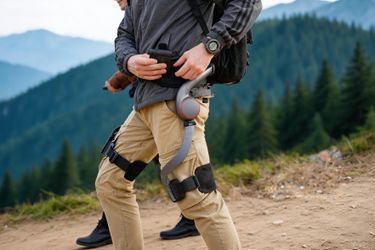
Can a Human Have an Exoskeleton?
Imagine walking up a steep hill without feeling tired, or carrying a heavy backpack that suddenly feels light as air. This is what exoskeleton technology promises — a future where humans and machines move as one. So, can a human really have an exoskeleton? Absolutely. It’s not science fiction anymore — it’s happening right now.
What Exactly Is a Human Exoskeleton?
A human exoskeleton is basically a wearable robotic frame that works with your body, not against it. It fits around your legs, arms, or torso and helps you move with less effort. Think of it as a supportive second skeleton that boosts your natural strength and endurance.
Some models are fully powered, using small motors and sensors to assist motion, while others rely on smart mechanical design to share the load of your body weight. Either way, the goal is the same — to help you move farther, faster, and more efficiently.
Where Are Exoskeletons Used?
You’ll find exoskeletons in all kinds of environments:
Factories and warehouses, where workers walk and lift all day long.
Construction sites, to reduce strain during repetitive movement.
Outdoor and adventure settings, helping people hike or climb with less fatigue.
Why They Matter
The magic of an exoskeleton lies in how it blends technology with biology. It doesn’t replace human effort — it amplifies it. By supporting key muscle groups, an exoskeleton can reduce energy use, improve posture, and extend endurance, whether you’re on a job site or trekking through the wilderness.
Looking Ahead
The next generation of exoskeletons will be lighter, smarter, and easier to wear. Instead of feeling like a machine, they’ll feel like part of you — a natural extension that enhances your movement in everyday life.
Conclusion
Yes, humans can have exoskeletons — and they’re already walking among us. They don’t just make us stronger; they help us move better, longer, and with more freedom than ever before.
Join our mailing list for exclusive updates and $50 welcome discount.

Support Hours:
Mon - Fri: 9am - 5pm EST
Sat & Sun: Closed
©2026 AstroShell All Rights Reserved